
Why Scrapingbypass
Choose scraping API, proxy API or browser automation with clear trade-offs
Choose an access path that matches your workload: a managed scraping API for verification handling, a proxy for network and region control, or a browser for interactive pages. Compare Cloudflare 403 handling and DataDome solver API compatibility alongside session control, rendering, screenshots and retry cost. A proxy route alone is not a CAPTCHA solver.
Best fit for proxy and browser control
Choose proxy or browser automation when existing Playwright, Puppeteer or Selenium workflows need direct session control, custom cookies, sticky IPs or low-level request handling.
Why Scrapingbypass
Choose scraping API, proxy API or browser automation with clear trade-offs
Use this decision guide to choose between a managed web scraping API, proxy API, residential IPs and Playwright or Selenium browser automation. It compares page complexity, Cloudflare 403 risk, geo targeting, session control, screenshots, retry cost and integration effort so engineering and data teams can pick the right access path.
Access success stability 95%
Access-layer maintenance saved 80%
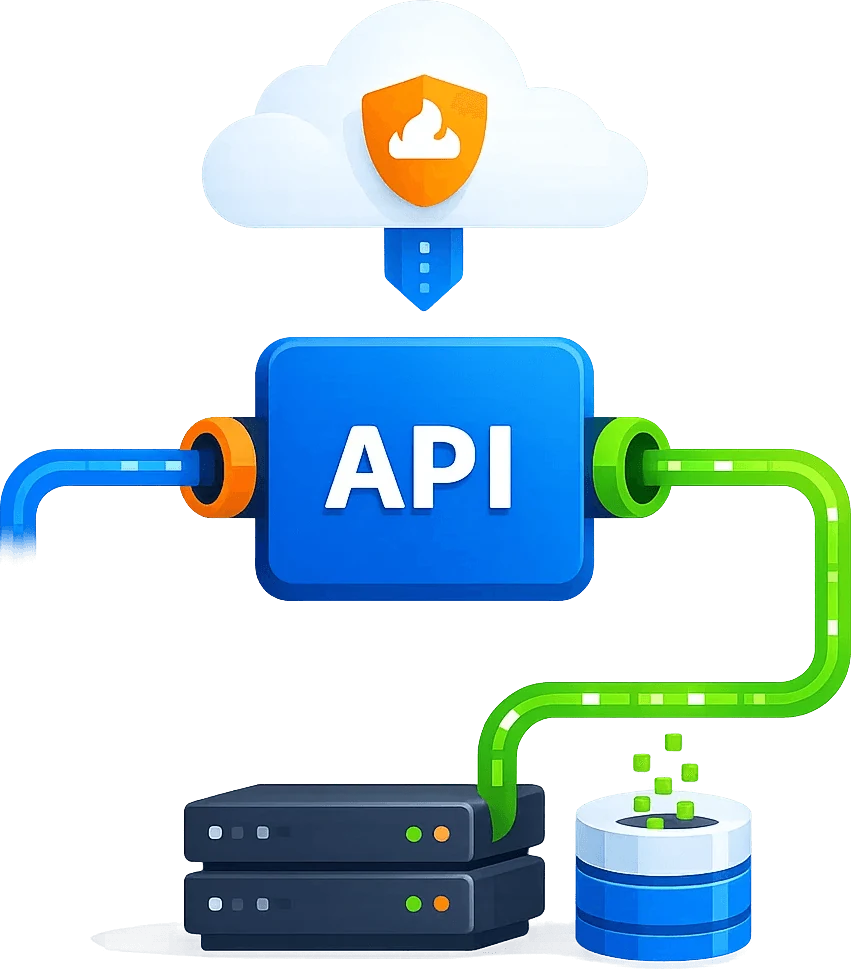
API mode
Retrieve HTML, screenshots, text, or structured output.
Proxy mode
Connect existing crawlers and browser automation.
Browser workflow
Handle clicks, sessions, screenshots, and rendering.
Hybrid setup
Combine geo access, monitoring, and concurrency.
API / Proxy / Browser
Manage regional access, sessions and screenshots in one layer
Move challenge handling, dynamic pages, proxy exits, retry logic, and logs out of business scripts and into a reusable web access layer.
STEP 01
API mode
Retrieve HTML, screenshots, text, or structured output.
STEP 02
Proxy mode
Connect existing crawlers and browser automation.
STEP 03
Browser workflow
Handle clicks, sessions, screenshots, and rendering.
STEP 04
Hybrid setup
Combine geo access, monitoring, and concurrency.
Use cases
Representative business scenarios
From one-off validation to long-running monitoring, combine capabilities by page complexity and output requirements.
Existing crawler integration
Keep current collection logic and move access stability into the Scrapingbypass layer.
Browser automation
Add proxy, session, screenshot, and retry capabilities to Playwright, Selenium, and Puppeteer.
Geo access verification
Validate pages, ads, search results, and redirects by country and language.
Long-term monitoring
Track availability with logs, screenshots, status codes, and retry rules.
Budget estimation
Estimate launch cost by requests, traffic, screenshots, rendering, and retries.

Integration steps
Connect the Scrapingbypass access layer in 4 steps
Validate one high-value page first, then expand into scheduled workflows, batch collection, or monitoring systems.
01. Define target access
Confirm URLs, regions, frequency, output format, and workflow scope.
02. Choose access strategy
Pick API, rendering, screenshots, dynamic IPs, sticky sessions, and retry rules.
03. Connect business systems
Send results to crawlers, AI agents, workflows, QA, or internal monitoring.
04. Review logs and optimize
Use status codes, failure reasons, screenshots, and logs to improve stability.
FAQ
Frequently asked questions
How is it different from a normal proxy?
A normal proxy mainly provides an exit. Scrapingbypass also covers challenge handling, geo context, dynamic pages, screenshots, structured output, retries, and logs.
Can existing crawlers use it?
Yes. Existing crawlers can connect through Proxy mode, while complex pages can be handled through API mode.
Does it support geo exits?
Yes. Tasks can be organized by country, language, device, and exit region for SEO, ads verification, and geo monitoring.