Job and talent data collection with Cloudflare and DataDome handling
Keep authorized job listings, role details and company profiles flowing into your recruitment pipeline. Scrapingbypass combines Cloudflare challenge handling with DataDome API request validation for supported job-board targets. Use regional sessions, incremental updates and listing checks to separate a verification failure from an expired vacancy.
Start Free Trial API DOCs Code generator
Why Recruitment & Talent Data Collection Is Hard
Four Core Challenges in Recruitment & Talent Data Extraction
Under aggressive anti-bot protection on hiring platforms, traditional scrapers often fail due to verification blocks, complex rendering, strict rate limiting, and constantly changing layouts. To generate reliable data over time, you need a collection pipeline that is resilient, scalable, and recoverable.
-
Cloudflare Verification Blocks Happen Frequently
Once a request triggers a challenge, you get blocked pages instead of data - breaking pipelines and increasing failure rates fast.
-
Dynamic Rendering Makes Parsing Difficult
Many pages load content asynchronously via JavaScript, so direct requests return incomplete HTML and missing key fields.
-
Strict Rate Limits Lead to Bans at Higher Concurrency
Platforms enforce access speed and behavioral signals; high-volume crawling can quickly trigger throttling or IP blacklisting.
-
Frequent Page Structure Changes Create Data Gaps
Job templates and selectors change often, causing field loss and hurting consistency for downstream analytics.
Technical Support Contact

Power End-to-End Recruitment & Talent Data Scraping with Scrapingbypass API
Handle Cloudflare challenges and confirmed DataDome CAPTCHA workflows before parsing job content. Your own queues, deduplication and incremental updates can then operate on validated listings instead of retrying verification pages.
-
Bypass Cloudflare Verification Automatically
Seamlessly pass Cloudflare challenges and verification flows, returning clean, parse-ready HTML to improve scraping success rates and stability.
-
Stable High-Concurrency Data Output
Support multi-region concurrency scheduling and task queues to reduce timeouts and costly retries - ideal for large-scale job listing scraping.
-
Built for Dynamic, JavaScript-Rendered Pages
Handle asynchronous loading and complex frontend frameworks with usable page responses, reducing empty or missing data during parsing.
-
More Efficient Incremental Updates
Run time-based and change-detection scraping to minimize duplicate crawls and resource waste, keeping your recruitment datasets fresh over time.

Use Cases
Best for Recruitment & Talent Data Scraping Pages That Need to Bypass Cloudflare and Maintain Stable Data Collection
Job Aggregator Platform Data Ingestion
Normalize and deduplicate multi-source job postings into a unified database, enabling filtering by city, role, industry, salary, and more. Scrapingbypass API bypasses Cloudflare verification to keep job lists and job details scraping stable over the long run.
Industry Salary & Role Trend Analytics
Continuously track job volume shifts, salary range changes, and skill demand trends to power labor-market dashboards. Scrapingbypass API improves data continuity and reduces sampling bias caused by Cloudflare blocks.
Competitor Hiring Strategy Monitoring
Monitor target companies' hiring activity, headcount signals, and recruitment cadence to evaluate expansion and investment direction. Scrapingbypass API ensures stable scraping and timely updates even under frequent verification challenges.
Talent Profiles & Skill Graph Building
Extract skills, experience requirements, and tool stacks from job descriptions to build structured talent profiles and skill taxonomies. Scrapingbypass API increases job detail page success rates to keep text datasets complete and representative.
Lead Qualification & Outreach Enablement
Structure job and company data to support lead scoring, industry segmentation, and intent evaluation. Scrapingbypass API reduces Cloudflare verification interruptions to boost scraping efficiency and pipeline stability.
Compliant Crawling & Audit-Ready Logging
Crawl at controlled rates with traceable logs such as timestamps, sources, and update history for audits and review. Scrapingbypass API returns more stable page results for consistent ingestion and compliance reporting.
Scrapingbypass Onboarding Workflow
1.Create Your Account
Register a Scrapingbypass API account - Sign Up Now
Register a Scrapingbypass Proxy account - Sign Up Now
One account gives you API and proxy access. Log in within 30 days and open Trial Activity from the gift icon to claim trial credits and traffic.
2.Test with the Code Generator
Enter your target URL in the Code Generator to test Cloudflare bypass. For DataDome-protected targets, review the DataDome CAPTCHA solver API workflow and confirm challenge compatibility with support before testing.
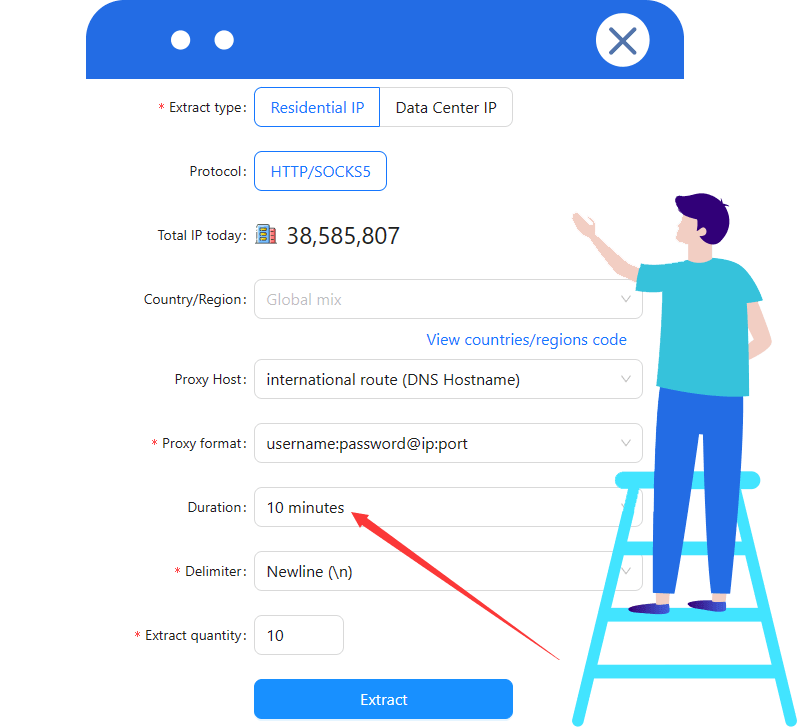
V1 includes a rotating proxy. V2 requires a stable proxy IP; configure a sticky session of at least 10 minutes when using Scrapingbypass rotating proxies.
For assistance, see the API documentation or contact Scrapingbypass Support.
3.Integrate the Scrapingbypass API
Integrate the confirmed Cloudflare or DataDome workflow into your application. Keep the proxy IP and session consistent, then validate the returned content before deployment.
4.Select a Pricing Plan
Choose a plan based on your usage - View Pricing
Choose a credit plan for Cloudflare JS Challenge. For DataDome CAPTCHA handling, confirm compatibility and pricing before purchasing.
For proxy traffic, select a Rotating Datacenter or Rotating Residential proxy plan.
Cloudflare bypass uses API credits and may require proxy support. For DataDome bypass, confirm supported targets and billing before choosing a plan. A proxy alone is not a CAPTCHA solver.

Scrapingbypass API Pricing
Handle Cloudflare challenges on 95%+ of websites and scrape data with confidence
Starting at $0.35 per 1,000 verifications. Failed requests are not charged. Each successful request uses 1 credit (Scrapingbypass V2 uses 3 credits).
Basic Plan
-
$49
-
Credits:80000Validity:30 DaysSpeed:20 req/s
Standard Plan
-
$79
-
Credits:300000Validity:30 DaysSpeed:20 req/s
Advanced Plan
-
$129
-
Credits:1000000Validity:30 DaysSpeed:25 req/s
Pro Plan
-
$259
-
Credits:2200000Validity:30 DaysSpeed:25 req/s
Premium Plan
-
$489
-
Credits:4600000Validity:30 DaysSpeed:30 req/s
-
Best Value
Ultimate Plan
-
$1056
-
Credits:12000000Validity:30 DaysSpeed:30 req/s
Need more credits than the standard plans provide? Get a custom plan tailored to your workload Unlimited credits / Dedicated servers / Higher concurrency / Priority technical support
Contact Us for a Custom Plan Buy Rotating IPsFAQFrequently Asked Questions
Why do recruiting and talent data crawls often hit Cloudflare challenges?
To prevent high-volume access and automated scraping, many job platforms enable Cloudflare challenges for frequent requests. Scrapingbypass API helps you get past Cloudflare verification and returns a parse-ready page, reducing task failures caused by blocks.
After bypassing Cloudflare with Scrapingbypass API, can I parse the response directly?
Yes. Scrapingbypass API is designed to output usable page content (such as raw HTML), so you can continue with field extraction, structured parsing, and storage - well-suited to common recruiting and talent data page formats.
Many job pages are dynamically rendered - can Scrapingbypass API help with "empty content" issues?
Many job pages load data asynchronously on the front end, so traditional requests may return a bare shell. Scrapingbypass API improves page availability and stability, reducing verification pages or missing content and increasing parse success rates.
How can I improve success rate and stability for recruiting and talent data collection?
Use a collection strategy like "task queues + concurrency control + retries + incremental updates." Scrapingbypass API handles Cloudflare challenges and reliably fetches pages, significantly reducing interruptions and failure rates.
Is Scrapingbypass API suitable for large-scale job scraping and long-term monitoring?
Yes. Recruiting and talent datasets often require ongoing updates across regions, roles, and companies. Scrapingbypass API supports high-concurrency execution with stable output, making it easy to build long-term monitoring and trend analysis systems.
What's a typical integration pattern for Scrapingbypass API in recruiting and talent data workflows?
A common approach is to send target URLs to Scrapingbypass API to fetch a usable page, then handle parsing, cleaning, deduplication, and storage in your own system. This isolates Cloudflare-bypass logic and lowers long-term maintenance cost for your crawler.