
Handle JS Challenge, Turnstile and WAF session checks while keeping your existing scraper and parser.
- JS Challenge · Turnstile
- Consistent sessions and request profiles


Integrate supported Imperva / Incapsula Cloud WAF verification workflows through an API. Test compatibility and maintain consistent IPs, headers and sessions.
Preserve cookies and matching User-Agent values. Avoid reusing a result with unrelated request contexts.
Check the content type and expected fields. HTTP 200 may still contain a verification or error page.

Challenge handling, proxy routing and AI tool integrations.
Handle JS Challenge, Turnstile and WAF session checks while keeping your existing scraper and parser.
Handle supported slider and puzzle challenges, keep sessions consistent and validate returned content.

Route through residential, datacenter or custom proxies. Match regions and keep IPs and sessions consistent.

Use the API in AI coding tools, terminal tasks and workflows. Choose the integration that fits your tool.
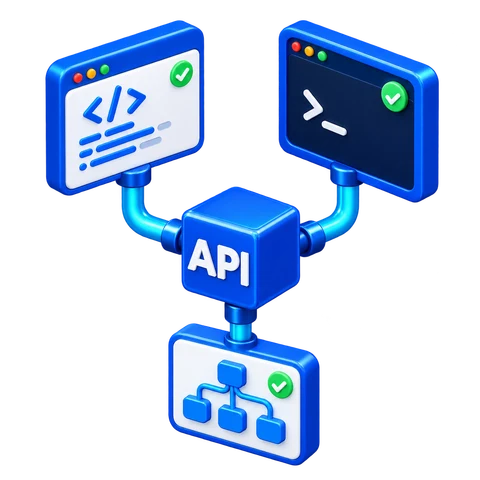
Set the target, parameters and proxy
Handle challenges and select the route
Check response status and content
Extract data with your existing parser

Use the API for verification and request forwarding on supported Imperva / Incapsula targets. Keep your current collection system: confirm compatibility, then pass the response to your application.
Handle verified compatible targets; a proxy connection alone is not a verification service.
Forward GET, POST and other requests with their URL paths, query parameters and business bodies.
Supply Referer, cookies and required headers to preserve the request context.
Choose browser and platform fingerprints according to the API documentation and keep parameters consistent.
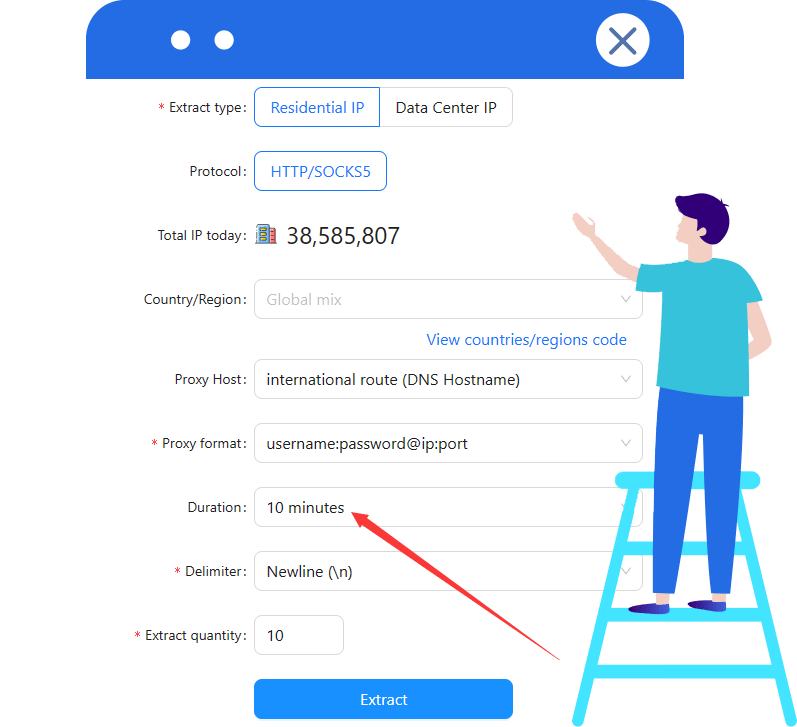
Configure HTTP or SOCKS5 routing and choose an exit and session duration suited to the target.
Use your existing parser after checking that the returned content matches the expected result.
Keep your development stack and collection framework with standard HTTP requests. Official SDKs are available for Python, Node.js and Go; other languages can call the documented API directly.
Configure the API key, target and request parameters in your existing Python data-processing scripts.
Call the API from services or scheduled jobs while retaining your asynchronous processing logic.
Add API requests to Go services and use your business queue to schedule tasks and concurrency.
Test the target, API key and proxy with a minimal request before moving working parameters into code.
Send requests with your existing HTTP client without replacing the application framework.
Organize request parameters and response types in the HTTP client already used by your project.

Pagination and continuous access need a stable request context. With V2(s), combine Cookie or Part mode with a fixed or sticky proxy rather than changing the exit or browser parameters after verification.
Store the encrypted cookies returned by the API and send them with later requests in the same task.
Use x-cb-part to separate sessions while the API manages verification cookies for the target.
Use different Parts for independent tasks or threads to avoid mixing verification contexts.
Configure the required fixed or time-limited proxy for V2(s) and keep its IP stable within a session.
Bring custom routing through x-cb-proxy; proxy traffic and API credits are billed separately.
Configure x-cb-fp as documented and keep User-Agent, cookies and task context consistent.
A completed HTTP request does not necessarily contain business data. Use API status, target content and error information to decide what happens next, then pass valid results to your parser or automation.
Read API status and target responses as documented rather than relying on a single HTTP code.
Confirm the response is the expected HTML or JSON, not a challenge page or error message.
Look for expected page elements and data regions before running extraction logic.
Check fields, error flags and business status instead of treating empty or error objects as success.
Keep returned request IDs, error codes and messages to reproduce issues and contact support.
Limit retries by timeout and error type; stop when a target is unsupported or denies access.


|
|
Monitor product listings, prices, stock, promotions and reviews across permitted retail sources. |
|
|
Track permitted ad creatives, landing-page changes and campaign signals for market research. |

|
|
Monitor permitted public posts, engagement and sentiment for social listening and trend analysis. |

|
|
Organize permitted media metadata and licensed assets into searchable reference libraries. |

|
|
Collect permitted publication updates, topic pages and release information for research and monitoring. |

|
|
Collect permitted market prices, historical records and timestamps for research, alerts and analytics. |

|
|
Monitor job listings, hiring demand, skills and salary ranges across permitted sources. |
|
|
Track permitted property listings, local businesses and pricing changes for regional market research. |

|
|
Monitor permitted fares, availability and policy updates with dates, currency and region preserved. |

|
|
Track permitted offers, discount changes and expiry dates for campaign comparisons. |
|
|
Monitor permitted schedules, container events and freight rates with shipment IDs and timestamps. |

|
|
Collect permitted public risk indicators and source evidence for review, scoring and alerts. |
Register a Scrapingbypass API account - Sign Up Now
Register a Scrapingbypass Proxy account - Sign Up Now
One account gives you API and proxy access. Log in within 30 days and open Trial Activity from the gift icon to claim trial credits and traffic.
Use the Code Generator to configure and test Imperva / Incapsula requests. Check target support in the API documentation and keep the proxy IP, cookies and session consistent.
V1 includes a rotating proxy. V2(s) requires a stable proxy IP; configure a sticky session of at least 10 minutes when using Scrapingbypass rotating proxies.
For assistance, see the API documentation or contact Scrapingbypass Support.
Integrate your tested Imperva / Incapsula request code into the application. Validate response status and content before parsing, pagination or automation.
After testing, choose an API-credit plan based on your usage. View Pricing
For proxy traffic, select a Rotating Datacenter or Rotating Residential proxy plan.
Challenge handling consumes API credits; some workflows also need a proxy. API credits and proxy traffic are billed separately. A proxy connection does not replace challenge handling.
No. A proxy provides routing. Verification handling must use the supported workflow for the target.
Proxy IP and region: Keep the same approved exit route during a session; rotate between independent tasks when appropriate.
Cookies and headers: Preserve cookies and matching User-Agent values. Avoid reusing a result with unrelated request contexts.
No universal support is promised. Confirm the target and challenge type with a small authorized test first.
No. Validate returned content before parsing, including the expected HTML or business fields.
HTML or JSON validation: Check the content type and expected fields. HTTP 200 may still contain a verification or error page.
Review the API documentation, confirm the target with support and check the applicable API and proxy plans.
V1 and V2(s) consume 1 API credit for each successful request.
When V2(s) successfully completes a verification challenge, it consumes 2 additional credits. This covers supported Cloudflare JS Challenge, Cloudflare Turnstile, DataDome and Incapsula challenges.
An unsuccessful request does not consume the base request credit. However, the 2 challenge credits are deducted as soon as verification succeeds and are not refunded if the subsequent response fails.
Credit consumption rules

Scrapingbypass API significantly improved our data extraction efficiency, especially for websites protected by Cloudflare. The API is straightforward, easy to integrate, and saved us countless hours dealing with anti-bot restrictions.
Since adopting Scrapingbypass API, bypassing Cloudflare challenges has become effortless. It handles captchas reliably and allows uninterrupted access to the data pipelines we depend on.
Scrapingbypass simplified our web data collection workflow by automatically handling complex Cloudflare verifications. It's fast, stable, and extremely reliable in production environments.
As a market analyst working with large-scale web sources, avoiding 403 errors is critical. Scrapingbypass API ensures consistent access to protected pages and delivers clean, usable data.
Scrapingbypass makes bypassing Cloudflare protection simple. The documentation is clear, the API behavior is predictable, and integration was completed in minutes. Highly recommended for developers.
I was initially skeptical, but Scrapingbypass exceeded expectations. It consistently bypasses Cloudflare human verification and has become a core component of our data infrastructure.
Keep the same approved exit route during a session; rotate between independent tasks when appropriate.
View More
Preserve cookies and matching User-Agent values. Avoid reusing a result with unrelated request contexts.
View More
Explore API integration tutorials, code examples and common questions covering request configuration, sessions and response validation.
View More

